
Defense

The defense sector today requires increasingly integrated, resilient, and secure infrastructures capable of connecting people, data, assets, and processes in real time.
In this context, technology is not only a factor of efficiency, but a strategic lever to enhance situational awareness, decision-making speed, and operational continuity.

The industry challenges.

  • TO-BE-Interoperabilità

    Interoperability

    One of the main challenges in the defense sector is enabling communication between often heterogeneous systems, platforms, and technologies.
    Integration across infrastructures, sensors, networks, software, and diverse operational environments is essential to ensure coordination and effectiveness.
  • TO-BE-ISO-9001

    Operational Readiness

    Defense structures must be ready to respond rapidly, with systems that can be monitored, diagnosed, and activated almost in real time.
    Operational readiness depends not only on equipment, but on the ability to access up-to-date data, clear workflows, and reliable tools to interpret the context.
  • TO-BE-Declare

    Data Security

    In the defense sector, protecting information is a top priority.
    The growing presence of connected networks, AI, IoT, and software platforms makes it increasingly important to rely on robust, secure, and resilient architectures against vulnerabilities and interference.
  • TO-BE-Localizzazione

    Traceability & Localization

    Knowing the position of assets, personnel, vehicles, and functions is crucial to improving control and situational awareness.
    Traceability enhances logistics, internal management, security of sensitive areas, and operational coordination.
  • TO-BE-Decisioni

    Decision Support

    The complexity of operational contexts requires tools capable of processing large volumes of data and delivering actionable insights.
    Artificial intelligence, machine learning, and analytics are becoming central to reducing response times and improving decision quality.
  • TO-BE-Sostenibilità

    Infrastructure Resilience & Sustainability

    Defense requires infrastructures that are reliable, durable, and optimized in resource usage.
    Resilience means operational continuity, smarter maintenance, and the ability to adapt to changing scenarios without loss of efficiency.

Tailored solutions

We design unique experiences tailored to every need.

1

System integration

To address interoperability challenges, platforms and infrastructures must connect environments, data, and functions within a unified framework.
The goal is to reduce fragmentation, increase visibility, and improve coordination across units, teams, and technologies.

  • Integration of heterogeneous systems
  • Greater information continuity
  • More effective coordination across functions and platforms

Localization & Operational Wayfinding

In bases, logistics hubs, operational centers, and complex facilities, precise localization becomes a key tool for efficiency and safety.
Knowing where people, assets, and functional areas are located helps streamline movements, procedures, and internal management.

  • Asset and personnel tracking
  • Navigation within complex environments
  • Improved situational awareness
2
1

Security & Data Protection

Defense solutions must be designed with a security-by-design approach to protect networks, devices, and sensitive information.
This means reducing vulnerabilities, strengthening access control, and increasing communication resilience.

  • Protection of data and infrastructures
  • Access and network control
  • Enhanced cyber and operational resilience

Analytics & decision support

Data analytics platforms, advanced dashboards, and predictive tools help interpret the operational context and enable faster responses.
The ability to turn data into decisions is now one of the key drivers of operational effectiveness and precision.

  • Real-time monitoring
  • Predictive analytics and decision support
  • Reduced response times
2
1

Operational Control & Internal Management

In defense environments, smarter management of spaces and flows improves daily efficiency and coordination capabilities.
Supervision and control solutions help teams maintain a clear view of movements, usage, and operational criticalities.

  • Monitoring of flows and activities
  • Improved internal facility management
  • Faster identification of critical issues

Training & Advanced Interfaces

The sector’s transformation also requires better tools for training, simulation, and information delivery.
More intuitive interfaces, multimedia systems, and advanced digital environments improve learning, training, and human–technology interaction.

  • Support for training and simulation
  • Improved information readability
  • More effective interaction with complex systems
2

Discover the technologies

When lighting becomes infrastructure.

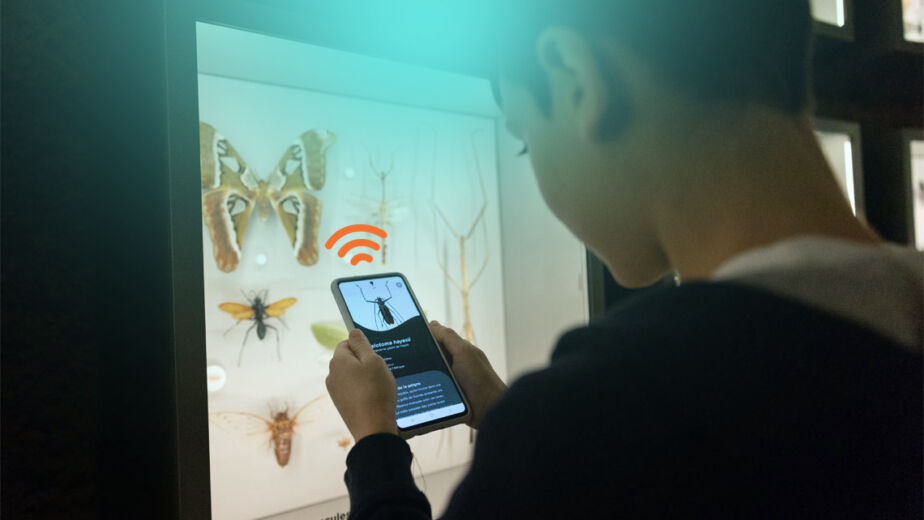
LiFi Geolocation

Turn every light fixture into an information source.

For enhanced visitor experiences and flow management

LiFi Surfing

Bidirectional network connection system via infrared.

For sensitive areas.

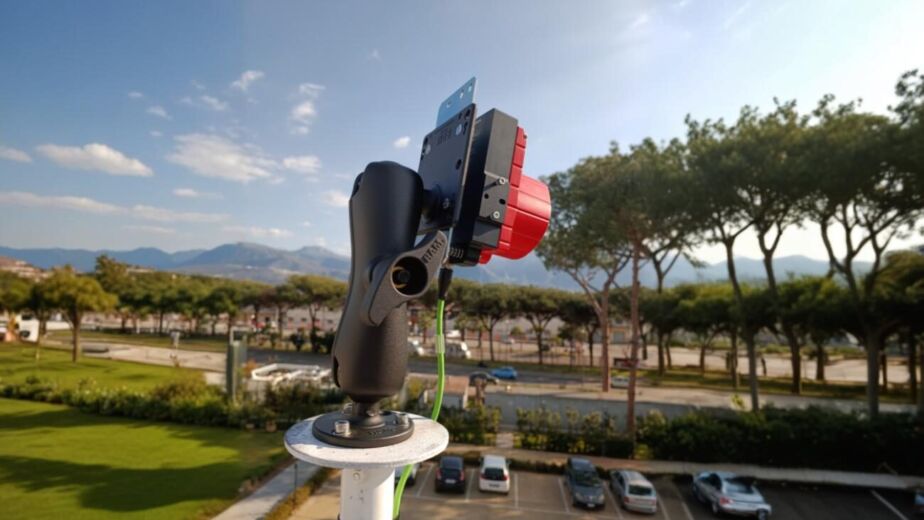
LiFi Point-to-Point

Point-to-point communication system via infrared, usable both indoors and outdoors, without wiring.

For sensitive areas.

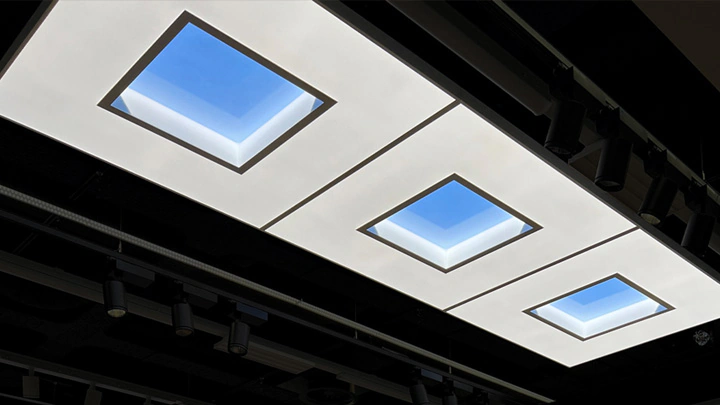
Natural Light

Circadian lighting.

For the well-being and performance of patients and staff.

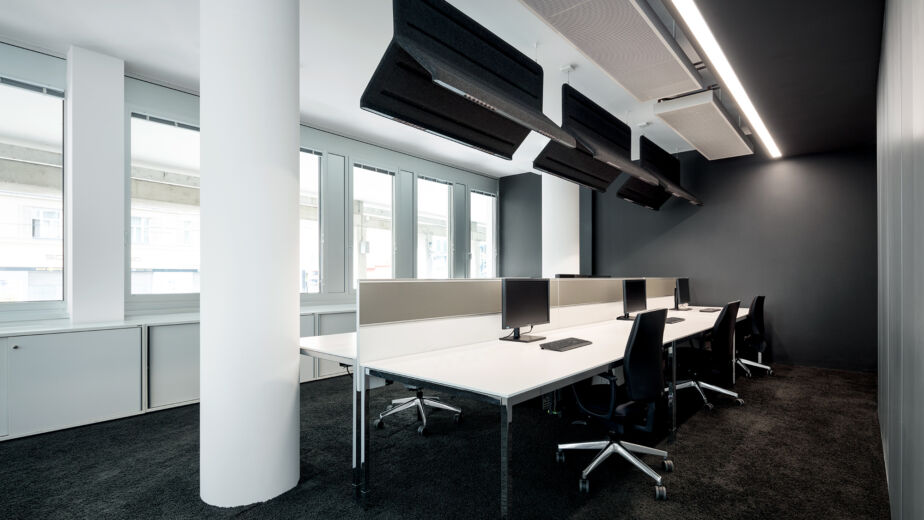
Sound-Absorbing Design

Lighting with integrated acoustic insulation.

For comfort and privacy.

Architectural Lighting

Impactful lighting scenarios for both indoor and outdoor spaces.

Hospital façades and facilities to enhance branding and support wayfinding.

BMS Systems

Impactful lighting scenarios for both indoor and outdoor spaces.

For personalized areas and beds, and smart space management.