
Smart Building
The smart building sector is transforming the building from a physical container into an intelligent ecosystem, where systems, data, automation, and services work together to improve efficiency, comfort, and operational management. Offices, workspaces, headquarters, and complex buildings now require infrastructures capable of integrating energy, connectivity, well-being, and control within a single dynamic and responsive architecture.
The industry challenges.
-
System integration
One of the main challenges of smart buildings is enabling systems, sensors, platforms, and different functions to communicate within a single coherent ecosystem. Lighting, HVAC, security, access control, energy monitoring, and digital services must be able to converge under a shared control framework, overcoming technological fragmentation. -

Energy efficiency and sustainability
Consumption optimization is now one of the central drivers in the evolution of intelligent buildings. Reducing energy demand, making better use of renewable sources, and adapting building operations to actual usage profiles are decisive factors for containing costs and contributing to decarbonization goals. -

Occupant comfort and well-being
A smart building must be able to improve the quality of the user experience, not just the technical efficiency of the infrastructure. Indoor comfort, light quality, temperature, air quality, and the dynamic adaptation of spaces are increasingly central elements for well-being, productivity, and overall experience quality. -

Data management and analytics
Intelligent buildings generate large amounts of data, but the real challenge is turning that data into useful information. Analytics, AI, and machine learning make it possible to predict consumption, detect anomalies, optimize systems, and interpret patterns in space usage, but they require appropriate infrastructure and governance. -

Connectivity and digital infrastructure
Connectivity is the core of the smart building, because it enables data collection, automation, system interaction, and user services. Without a solid and well-designed network, a building cannot support either real-time monitoring or the distributed intelligence that defines its advanced operation. -

Skills and governance
The transition toward smart buildings requires new technical, digital, and managerial skills. In Italy, there is still a significant professional gap in the green and 4.0 skills needed to design, integrate, and manage intelligent buildings effectively.
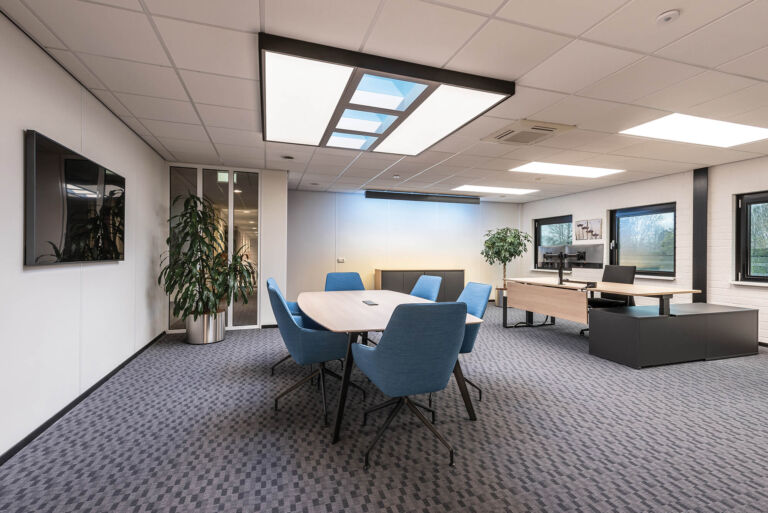





Tailored solutions
We design unique experiences tailored to every need.
System integration and unified platforms
To overcome fragmentation, platforms are needed that can integrate lighting, climate control, security, access control, sensors, and monitoring systems into a single infrastructure. This makes it possible to improve coordination, control, and the building’s ability to respond to actual conditions of use.
- Integration between building systems and digital platforms.
- Greater coordination among building functions.
- More centralized and responsive management.
Energy management and sustainability
Monitoring, automation, and energy optimization systems help reduce waste, improve resource use, and adapt consumption to the actual behavior of occupants. In this way, the building can become more efficient, more sustainable, and more aligned with environmental and regulatory goals.
- Reduced consumption and waste.
- Real-time energy optimization.
- Greater infrastructure sustainability.
Environmental well-being and human-centric lighting
The quality of a space also depends on the ability to regulate light, climate, and comfort according to the people who use it. Human-centric lighting and dynamic environmental control solutions improve well-being, support concentration, and make the environment healthier, more legible, and more welcoming.
- Better visual and environmental comfort.
- Spaces better suited to well-being and productivity.
- Dynamic adjustment based on actual use.
Connectivity and intelligent infrastructure
A robust and widespread network is the foundation for collecting data, enabling systems to communicate, and delivering digital services to users. Connectivity makes continuous monitoring, advanced automation, and a smoother relationship between building, people, and devices possible.
- Digital infrastructure supporting systems and services.
- Greater continuity between data, devices, and environments.
- Support for the building’s intelligent operation.
Analytics and predictive maintenance
The use of data makes it possible to anticipate anomalies, understand usage patterns, and optimize building behavior. Analytics help improve maintenance, efficiency, system reliability, and the quality of operational decisions.
- Early detection of anomalies and failures.
- Prediction of consumption and system needs.
- Faster and more informed decisions.
Intelligent space management
Smart buildings must be able to understand how spaces are actually used and adapt accordingly. This makes it possible to optimize occupancy, bookings, room usage, people distribution, and the quality of the workplace experience.
- Optimization of space usage.
- Support for occupancy and bookings.
- Greater efficiency in day-to-day management.
Governance and team support
To truly unlock the value of a smart building, supervision tools and teams capable of managing its complexity are needed. Dashboards, control systems, and specific training support facility managers, property managers, and technical teams in making more effective decisions and maintaining building performance over time.
- Support for facility and building management.
- Greater visibility into performance and critical issues.
- More informed and continuous building management.
Discover the technologies
When lighting becomes infrastructure.
LiFi Geolocation
Turn every light fixture into an information source.
For location-based services, wayfinding, occupancy insights and the automatic activation of building services.
LiFi Surfing
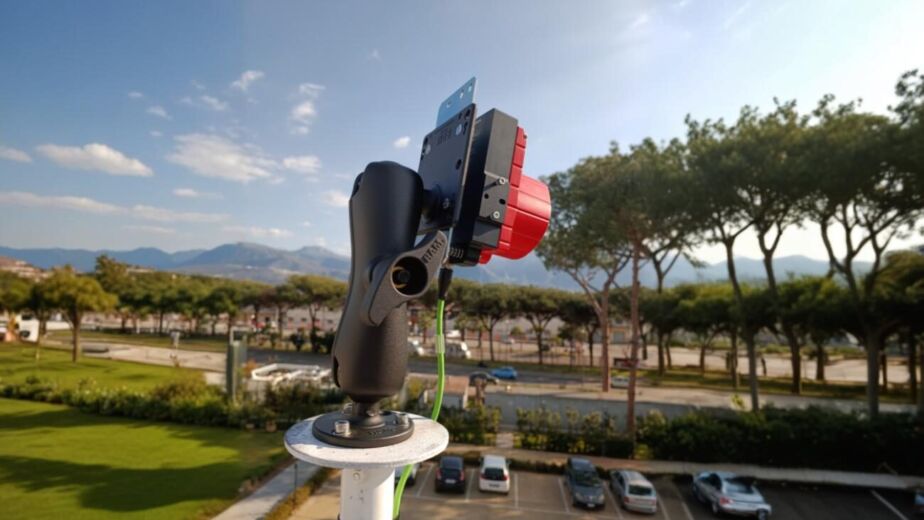
Bidirectional network connection system via infrared.
For two-way connectivity in workstations, meeting rooms, library areas and communal spaces.
LiFi Point-to-Point
Point-to-point communication system via infrared, usable both indoors and outdoors, without wiring.
To connect specific indoor and outdoor areas without the need for major building work and with quick integration.
Natural Light
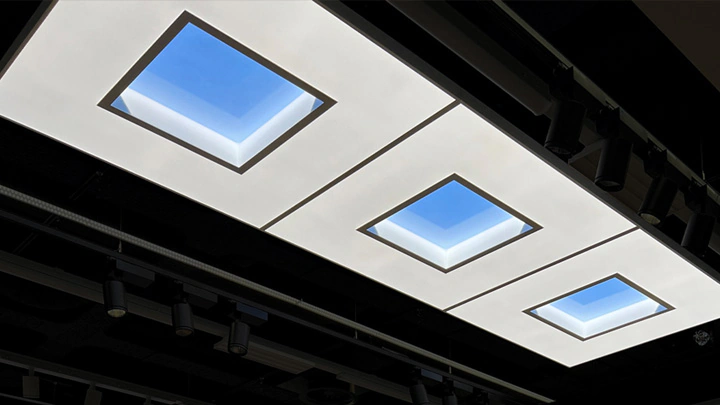
Circadian lighting.
To support occupants’ circadian rhythms, productivity and well-being.
Sound-Absorbing Design
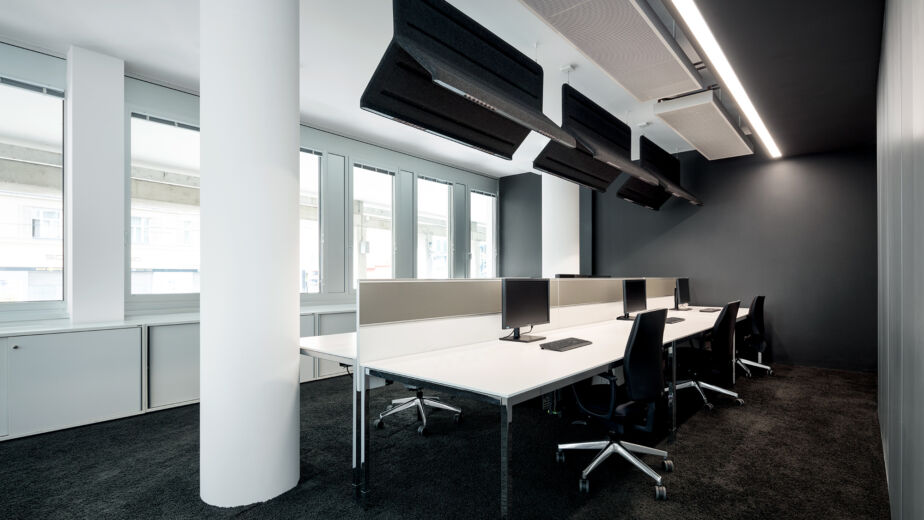
Lighting with integrated acoustic insulation.
To improve acoustic comfort in open-plan offices, phone booths, collaborative spaces and meeting rooms.
Architectural Lighting
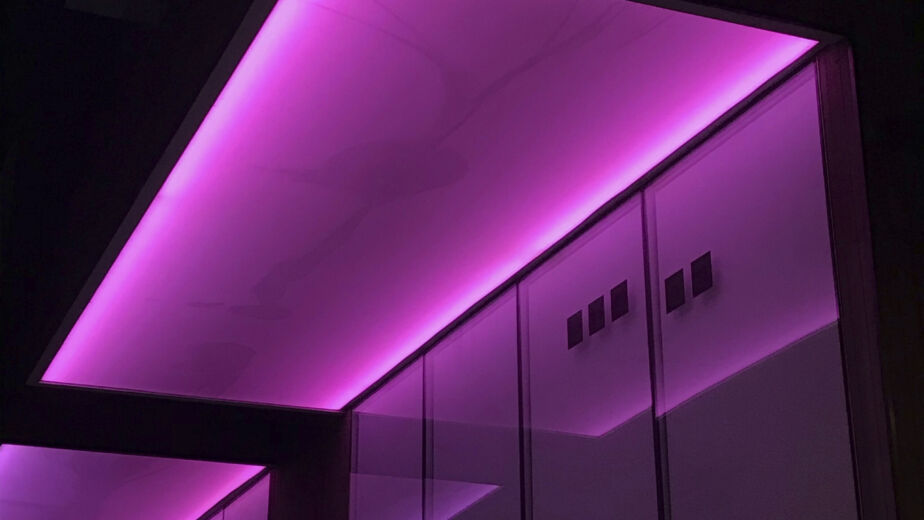
Impactful lighting scenarios for both indoor and outdoor spaces.
To connect specific indoor/outdoor areas without invasive work and with fast integration.
BMS Systems
Impactful lighting scenarios for both indoor and outdoor spaces.
For integrated control, automation, energy management, area-specific customisation and smart space management.